
Unmanaged silt from drain cleaning leads to contamination, vector breeding, and disease spread in urban areas
During routine drain cleaning, extracted silt is often dumped along roadsides. This waste contains organic matter, sewage residue, and contaminants.
Instead of solving the problem, it creates new health and sanitation risks.
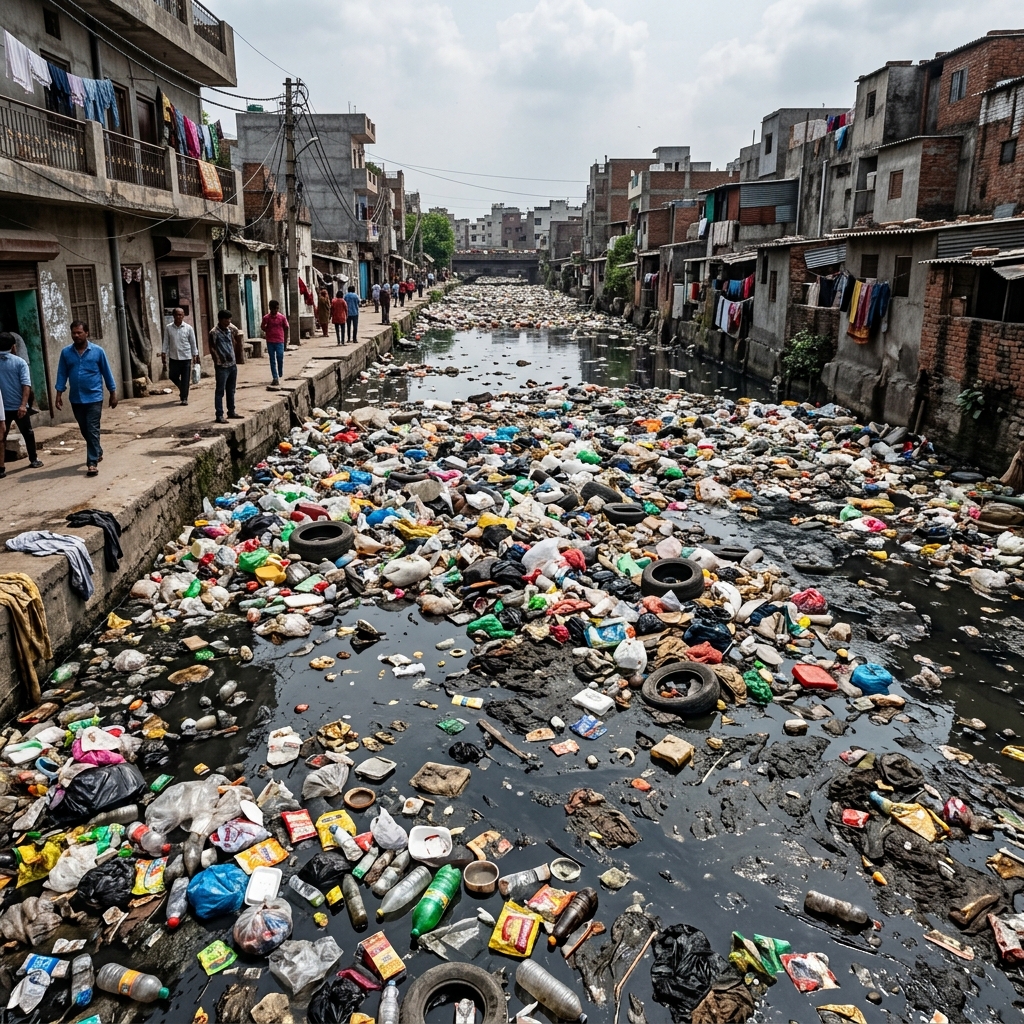
Unmanaged drain waste contributes to multiple urban health concerns
Mosquito breeding increases in stagnant wastewater from exposed silt
Standing water in dumped waste supports vector growth
Contaminated runoff leads to cholera, typhoid, and diarrheal infections
Dried silt turns into dust. Airborne particles cause breathing problems and irritation
Direct exposure to contaminated sludge causes skin infections, rashes, and bacterial infections
Systemic gaps in current drain cleaning practices
No structured method to store and transport silt safely after removal
Waste is temporarily dumped in public areas without control
Silt retains water, increasing weight, leakage, and vector breeding
Multiple steps (clean → dump → reload → transport)
→ Delays, spillage, and inefficiency
Dependence on manual or semi-mechanized methods
→ Inconsistent handling and safety risks
No defined system for timely transport to designated disposal sites
→ Waste remains exposed for long durations
A complete waste handling system that stops disease spread
Waste is contained and transported safely
Sealed containers prevent exposure
No stagnant water means no mosquito breeding
See how the Cleanify system prevents disease transmission through proper waste handling.
Request Demo For Your City