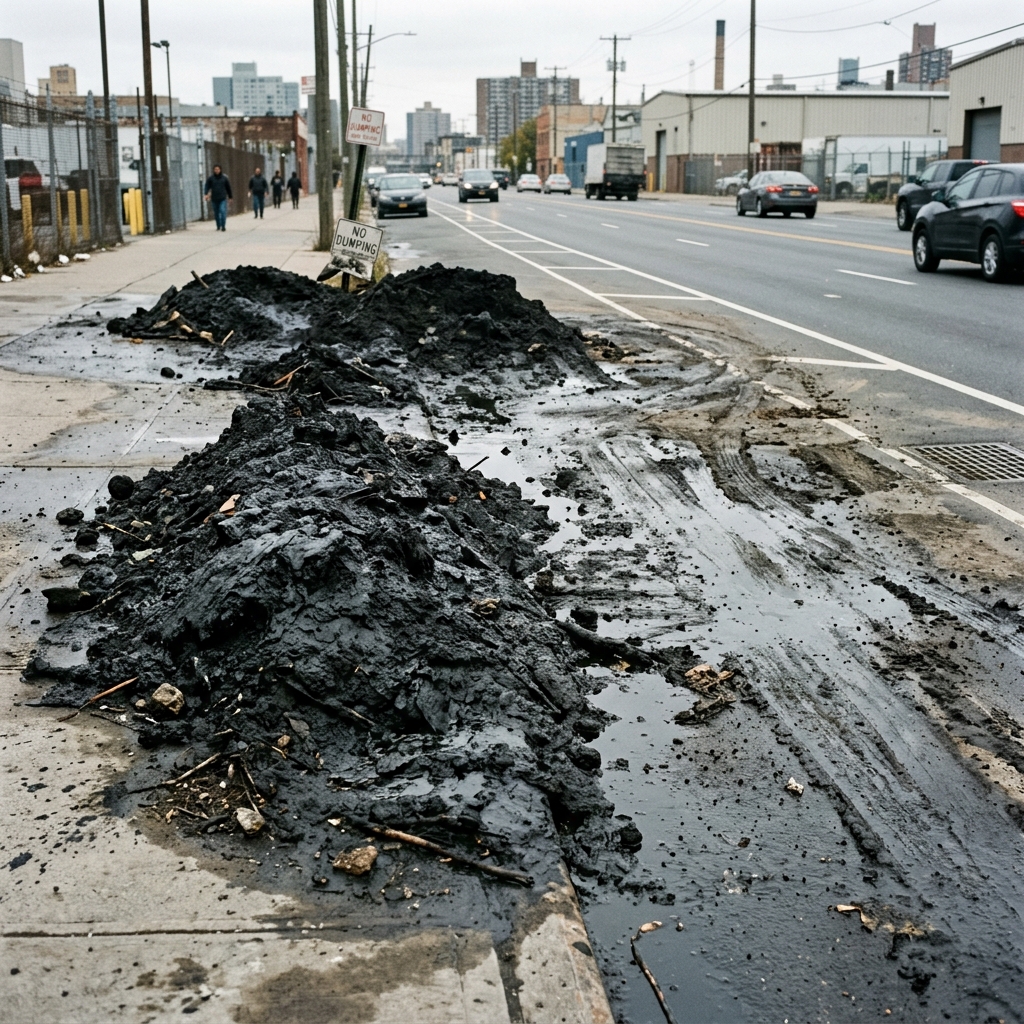
Two workers with shovels can clean a drain in a few hours. They cost less than specialized equipment. They are available in every city. So why would any municipality consider investing in mechanical cleaning systems?
The answer lies in what happens after the cleaning. Manual methods address one problem while creating several others. System-based approaches solve the drain problem completely. The comparison matters because the choice affects not just cleaning budgets but public health, environmental compliance, and long-term infrastructure costs.
The Manual Cleaning Problem
Manual drain cleaning relies on human workers entering drains with basic tools. The process has remained largely unchanged for decades:
- Workers descend into confined spaces with poor ventilation
- Shovels and buckets remove accumulated material
- Waste gets transferred to the surface for collection
- Material sits exposed during transfer and transport
Each step introduces problems. Workers face health hazards from toxic gases and pathogenic organisms. Waste exposure creates air pollution and attracts disease vectors. Spillage during transport spreads contamination across multiple locations.
The economics look attractive on the surface. Hourly labor rates seem reasonable. But these costs multiply when you factor in:
- Multiple workers needed for each cleaning operation
- Health costs from worker injuries and illness
- Road cleaning required after each drain cleaning
- Environmental remediation for affected areas
- Repeated cleaning cycles from incomplete waste removal
The System-Based Advantage
Mechanical systems like the Vinayak ODSC approach drain cleaning differently. Instead of separate steps that each create problems, they integrate the entire process:
Jet Cleaning
High-pressure water loosens compacted silt and debris without manual entry. Workers stay safely outside the drain while the system does the physical work.
Immediate Collection
Vacuum systems capture loosened material the moment it dislodges. There is no opportunity for waste to escape into the environment.
Contained Storage
Material moves directly into sealed storage tanks on the machine. From removal to disposal, waste remains completely contained.
Direct Transport
The machine travels to disposal sites with its contained load. No intermediate transfers, no spillage points, no opportunities for pollution.
Real-World Efficiency Differences
Field studies comparing manual and system-based cleaning reveal significant performance gaps:
These numbers explain why cities that switch to system-based cleaning rarely return to manual methods. The productivity gains are immediate and the quality improvements are substantial.
The Bottom Line
Manual cleaning remains common because it requires no capital investment and uses familiar methods. System-based cleaning requires upfront commitment but delivers superior outcomes across every metric.
The question is not whether mechanical systems work better. They do. The question is whether cities are willing to invest in better solutions or continue accepting the hidden costs of outdated approaches.
Every rupee spent on manual cleaning that creates secondary pollution is a rupee that must be spent again on cleanup. Cities deserve systems that solve problems completely, not solutions that shift them around.
Request Demo For Your City